Rivington Reservoir and the West Pennine Moors: A Complete Family Guide
Two reservoirs, a ruined Victorian garden slowly lost to woodland, a moorland summit with views to Snowdonia, ospreys, and a barn café. Rivington is one of Lancashire's most underrated family days out.
Rivington Reservoir · Anglezarke · Rivington Pike · West Pennine Moors · Bolton · Chorley
Rivington Reservoir and the West Pennine Moors: A Complete Family Guide
Rivington sounds, on paper, like a reservoir walk. Lap of the lake, back to the car. That's one version of the day — and it's a perfectly good one. But knowing what else is here changes things considerably: a ruined terraced garden built by a Victorian soap millionaire, slowly reclaimed by woodland; a moorland summit with views from Snowdonia to the Lake District; a café in a seventeenth-century barn; ospreys, if you time it right. All within twenty minutes of Bolton or Chorley, most of it free, and it works for ages 3 to 14 — though the day looks different at each end of that range.
Rivington and the West Pennine Moors
5 areas
Lower Rivington Reservoir

Upper Rivington Reservoir

Anglezarke Reservoir

LEVER PARK

TERRACED GARDENS RIVINGTON
The Reservoirs
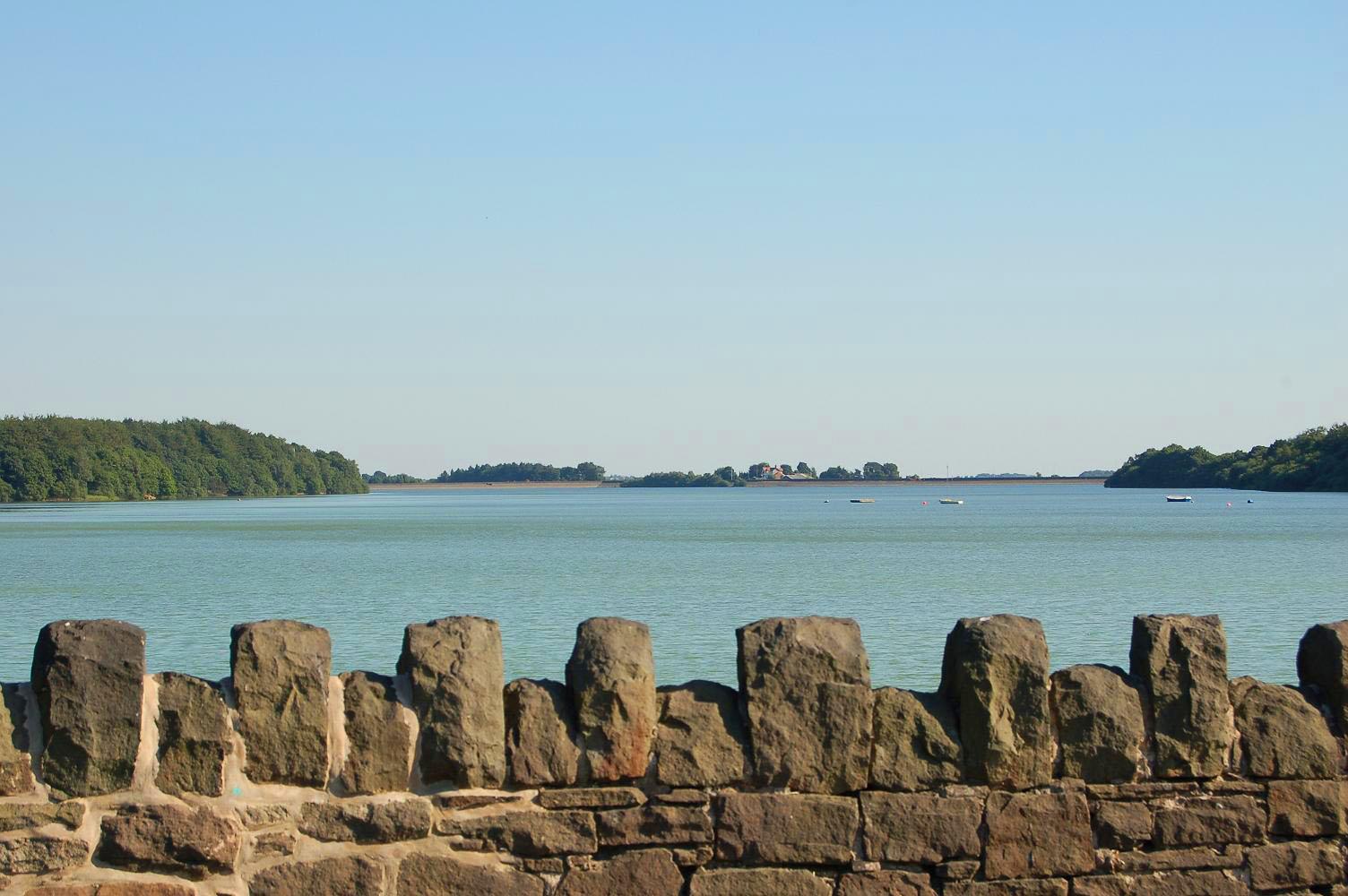
Lower Rivington Reservoir and Upper Rivington Reservoir sit side by side on the eastern edge of the West Pennine Moors, built in the 1850s and 1870s to supply Liverpool with water. The full circuit of both is around 7km — manageable with older children, probably too much for under-5s in one stretch. For younger ones, the Lower Reservoir path is the right call: flatter, shorter, café close at the end.
What makes the waterside walking here work for families is the context. The reservoirs sit in a proper landscape — moorland rising behind, the Lever Park woodland along the southern edge, long views down the water. It doesn't feel like a managed reservoir path. It feels like somewhere.
For quieter water and bigger skies, Anglezarke Reservoir is three kilometres to the north-west. More exposed, less visited, better for wildfowl, and where the ospreys fish when they're in residence. Worth including on a longer day or saving for a separate visit.
The Terraced Gardens
This is the thing most first-time visitors don't know about, and the best reason to bring children who are past the buggy stage.
In the early 1900s, William Hesketh Lever — the soap entrepreneur behind Sunlight Soap — bought the hillside above Rivington and commissioned a vast series of terraced gardens rising from the reservoir edge toward the moorland summit. Ornamental pools, Japanese bridges, pergolas, grottos, viewing terraces. Lever's bungalow burned down in 1913 (suffragette arson — worth mentioning to older children who'll find the history gripping). The gardens were left after his death in 1925 and have been slowly reclaimed ever since.
What you find now at Terraced Gardens Rivington is something more interesting than formal gardens: slow, photogenic ruin. Stone steps descending to nowhere. Pools gone to reed and iris. Pergola pillars standing in thicket. The Japanese garden stone bridge still intact. Kids find this brilliant — not in the way they find a nice garden brilliant, but in the way they find a proper exploration brilliant. You're finding things rather than looking at things.
Allow 45 minutes to an hour. The lower section has good paths; the upper terraces are rougher. Not pushchair-friendly beyond the first level.
Rivington Pike and the Pigeon Tower
At 456 metres, Rivington Pike is the high point — a squat stone tower from 1733 visible for miles, with views covering most of Lancashire and Cheshire, and on exceptional days: the Lake District, Snowdonia, the Isle of Man.
The climb from the Great House Barn takes 40–50 minutes at a steady pace. Relentlessly uphill, well-marked, and entirely worth it. Manageable for children from about 6 or 7 upwards if they're active and snack-motivated; younger children will need carrying for at least part of the way.
En route, watch for the Pigeon Tower — a small square folly built by Lever in 1910 with a spiral staircase children find very satisfying to climb. Factor in an extra ten minutes.
Anglezarke and the Ospreys
The quieter, wilder sibling. Anglezarke Reservoir sits north-west of the main Rivington area, with a mostly flat 5km track around the water, views to White Coppice and the open moor, and very few people compared to the Rivington circuits.
United Utilities has worked with local wildlife groups to encourage osprey nesting here, and the birds have returned in recent years. There's a viewing point on the eastern shore during the breeding season (April–August). You won't see them every visit. When you do — a large bird hanging over open water, folding and diving — it makes children go genuinely quiet for a moment before erupting. Bring binoculars.
The Yarrow Valley Country Park to the west connects the reservoir landscape with further woodland walking if you want to extend the day.
Wildlife Through the Year
Curlew call carries across the plateau from late February — one of the most distinctive sounds in upland England, worth pointing out to children who haven't heard it before. Ospreys are back at Anglezarke from late March; peak activity runs through June. On the reservoirs year-round: mallard, tufted duck, goosander, coot. In the Lever Park woodland: treecreepers, nuthatch, great spotted woodpecker — the bare canopy in winter makes birdwatching significantly easier than summer.
Spring is the best overall season. The Terraced Gardens in April, with birds nesting in the ruins, is genuinely special. Autumn brings fungi in the older woodland sections and good colour through Lever Park from September.
The Great House Barn
The practical hub of the visit — a seventeenth-century cruck-framed barn housing a café and visitor information. Worth arriving slightly early for a coffee before you start and planning your route back to finish here. Hot drinks, sandwiches, soup, cakes. Dogs welcome in the outdoor seating area.
United Utilities — Rivington · BL6 7SA
Practical Notes
Getting there: Great House Barn car park, BL6 7SA. Exit M61 at junction 6 (Horwich) and follow signs for Rivington. Around 20 minutes from Bolton, 25 from Chorley, 45 from Manchester city centre.
Parking: Pay and display at Great House Barn. Further car parks at Lower Rivington Reservoir and roadside options near Anglezarke. Weekend mornings fill fast in summer — before 10am is reliably calm.
Dogs: Welcome throughout — reservoir paths, Lever Park, the gardens, and the moor. Keep on leads near reservoir edges during nesting season (March–June).
Accessibility: The Lower Reservoir path is mostly flat and surfaced. The Terraced Gardens are rough beyond the first level. Rivington Pike is not accessible.
OS Map: Explorer 287 (West Pennine Moors).
What to bring: Wind layers — the Pennine edge catches weather in a way that surprises people even in midsummer. Waterproofs. Proper footwear for the Pike or upper gardens after rain. And snacks at a frequency you'd normally consider unreasonable.
Rivington, Anglezarke and the Lancashire reservoirs
10 placesLower Rivington Reservoir
Upper Rivington Reservoir
Anglezarke Reservoir
LEVER PARK
TERRACED GARDENS RIVINGTON

Pigeon Tower

Yarrow Reservoir

YARROW VALLEY

Round Loaf bowl barrow on Anglezarke Moor

Rivington Gardens
Plan your visit
Glade has location pages for the reservoirs, woodland, and green spaces across this area — with wildlife records, trail data, and what's currently in season.
Browse outdoor spaces near Rivington →
Was this guide helpful?